 Hotel search
 Back
7 days / 8 nights
Northern Germany Tour - Berlin and the Hanseatic Cities
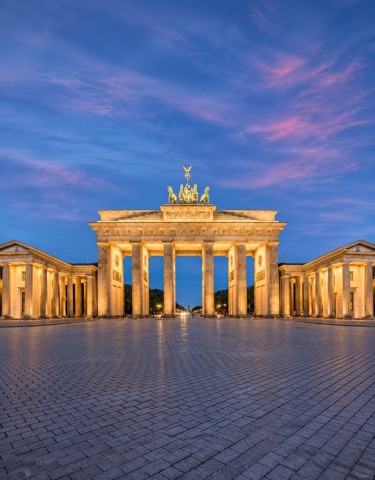
Starting from: € 1.294
Voli da: Bari - Bergamo - Bologna - Catania - Milano - Napoli - Palermo - Roma - Torino - Venezia - Cagliari
Voli da: Bari - Bergamo - Bologna - Catania - Milano - Napoli - Palermo - Roma - Torino - Venezia - Cagliari
Trip overview
Air-conditioned deluxe coach.
Italian-speaking tour escort only.
7 buffet breakfasts.
5 dinners (4 at hotels + 1 at a restaurant).
-

7 days / 8 nights Duration
-

Flight included Transport
-

Italian tour guide Leader
-

2 / 45 persone Travel group
-

2/99 Age range
Tour description
Northern Germany - From Hanseatic Cities to Great Centres of History
An eight-day journey through history, architecture and traditions, from vibrant Berlin to the historic cities of the Hanseatic League. The itinerary explores the medieval charm of Lübeck, Bremen and Quedlinburg, discovers the elegance of the palaces of Schwerin and Potsdam, and reaches Leipzig and Dresden, two important centres of German culture.
From historic districts and impressive monuments to landmarks of the 20th century, this tour reveals the many faces of Germany, where Hanseatic heritage, Prussian history and the events of the modern era come together in a journey full of contrasts.
 Air-conditioned deluxe coach
 International flights
Travel itinerary
-
Day 1 Berlin
Arrival in Berlin and check-in at the hotel. At 7:30 PM, meet the tour guide and the other participants, an opportunity to get to know the group before beginning a journey through the cities and landmarks of northern and eastern Germany.
Dinner and overnight stay at the hotel.
-
Day 2 Berlin: Monuments, History and Remembrance
Breakfast at the hotel. At 9:00 AM, begin a guided exploration of Berlin, a capital profoundly shaped by the events of the 20th century, from the two World Wars and the division of Germany to the fall of the Berlin Wall in 1989.
The day begins with a panoramic tour of the historic centre, passing through the Forum Fridericianum and the famous Unter den Linden boulevard, home to some of the city's most important landmarks. Admire Humboldt University, the State Opera, St. Hedwig's Catholic Cathedral, the Princes' and Princesses' Palaces, and the former Arsenal. Continue towards Berlin Cathedral and Museum Island, a remarkable cultural complex in the heart of the capital.
A walk takes us through the Nikolai Quarter, associated with Berlin's medieval origins and its earliest trading settlements, documented in 1237. We then reach Gendarmenmarkt, one of Berlin's most elegant monumental squares, before continuing to Potsdamer Platz, a symbol of the city's urban transformation after reunification, featuring contemporary buildings developed with the involvement of architect Renzo Piano.
After a lunch break, the visit continues to some of the most significant sites in German history: the Brandenburg Gate, the Holocaust Memorial and the Reichstag, home to the Bundestag, Germany's federal parliament.
The final part of the day focuses on the legacy of the Cold War. Visit the East Side Gallery, a roughly 1,300-metre-long surviving section of the Berlin Wall transformed into an open-air gallery of murals, and Checkpoint Charlie, one of the best-known crossing points between East and West Berlin.
Overnight stay at the hotel.
-
Day 3 Berlin - Schwerin - Lübeck - Hamburg
Breakfast at the hotel and departure for Schwerin, a city renowned for its picturesque 19th-century castle. The building stands on an island surrounded by lake waters and elegant gardens, creating a setting reminiscent of a fairy-tale royal residence.
After a stop and some free time, with lunch at leisure, continue to Lübeck, once known as the Queen of the Hanseatic League thanks to its central role in northern European trade.
The visit reveals reminders of this important mercantile past, still visible in the city's architecture. Among its most significant monuments are St. Mary's Church and the Town Hall, reflecting the prosperity Lübeck enjoyed during the Hanseatic period.
The itinerary also includes the house associated with the family of Nobel Prize-winning author Thomas Mann, whose novels portrayed the city's bourgeois society. Admire the Holstentor, the imposing medieval gate that has become Lübeck's symbol, and the historic salt warehouses, reminders of the commercial activities that contributed to the city's wealth.
At the end of the visit, departure for Hamburg.
Dinner and overnight stay at the hotel.
-
Day 4 Hamburg - Bremen
Breakfast at the hotel. The morning is dedicated to discovering Hamburg, a port city that has undergone profound changes over the centuries while preserving its connection with its Hanseatic heritage.
The destruction suffered during the Second World War significantly altered the city's appearance. However, post-war reconstruction and economic development strengthened Hamburg's position as one of Germany's leading commercial and cultural centres.
During the walking tour, visit St. Michael's Church, affectionately known to locals as Michel, one of the city's most recognisable landmarks. Continue to the Town Hall and the Stock Exchange, overlooking the elegant central square, before reaching the picturesque district of historic port warehouses.
Here, among traditional brick buildings and waterfront views, discover Hamburg's commercial heritage, closely linked to the transportation and storage of goods. The visit continues to the modern Elbphilharmonie, Hamburg's concert hall, whose contemporary architecture overlooks the harbour and has become one of the city's defining landmarks.
Free time for lunch. In the late afternoon, depart for Bremen, another important city in the Hanseatic tradition.
Dinner and overnight stay at the hotel.
-
Day 5 Bremen - Quedlinburg - Leipzig
Breakfast at the hotel. The morning is dedicated to visiting Bremen, a city that preserves numerous reminders of its importance within the Hanseatic League.
Walking through the historic centre, discover the monuments that reflect its long commercial and political history: the Cathedral, the Town Hall, the historic Schütting Chamber of Commerce and the Market Square, the monumental heart of the city.
The walk continues through the medieval atmosphere of the Schnoor Quarter, with its narrow lanes and characteristic historic houses, and along Böttcherstrasse, renowned for its brick buildings and distinctive examples of Expressionist architecture.
Two of Bremen's best-known symbols are also included: the Roland statue, representing the city's traditional freedoms and autonomy, and the monument to the Bremen Town Musicians, the characters made famous by the Brothers Grimm fairy tale.
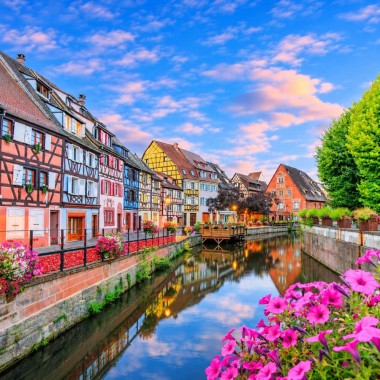
After lunch at leisure, depart for Quedlinburg, one of Germany's most charming historic towns. Walking among its half-timbered houses and cobbled streets offers a glimpse into an urban landscape that still preserves the character of medieval architecture.
At the end of the visit, continue to Leipzig, a city with a rich cultural and musical tradition.
Dinner at a restaurant near the hotel and overnight stay.
-
Day 6 Leipzig - Dresden
Breakfast at the hotel. The day begins with a walk through Leipzig's historic centre, a city that has played a significant role in Germany's political, religious and cultural history.
Johann Wolfgang von Goethe studied here, while in 1519 Martin Luther took part in the famous theological debate with Johannes Eck, an important episode in the religious controversies surrounding the Protestant Reformation.
Leipzig is also closely associated with the events that helped bring an end to Germany's division. At St. Nicholas Church, the Monday prayers became an important gathering point for the peaceful protest movement of 1989, which contributed to political change in East Germany and the subsequent fall of the Berlin Wall.
The city also holds a special place in European musical history. Richard Wagner was born in Leipzig, while Johann Sebastian Bach spent the final decades of his life here, leaving an extraordinary musical legacy. The composer is now buried in St. Thomas Church.
In the late morning, depart for Dresden, known as the Florence on the Elbe for its outstanding artistic and architectural heritage.
After a lunch break, explore the historic centre, where some of Saxony's most important monuments are concentrated. Admire the Zwinger, an elegant Baroque complex, the Semperoper, a prestigious opera house, and the Catholic Court Church.
The visit continues to the Frauenkirche, the Church of Our Lady, rebuilt after the devastation of the Second World War, and the famous Fürstenzug, the Procession of Princes, a monumental mural made from approximately 25,000 porcelain tiles depicting the succession of Saxon rulers.
Dinner and overnight stay at the hotel.
Important information
General information about the trip
EU citizens: valid national identity card or passport. Non-EU citizens: passport and Schengen visa, if required; check entry requirements with the relevant consulate.
Visas and vaccinations
None required in Germany. EU citizens: no visa needed, just a valid national ID card or passport. Non-EU citizens: Schengen visa if required; check entry rules before travelling.
Emergency numbers
Emergencies in Germany: 112 (European emergency number). | Police: 110. | Ambulance and Fire Brigade: 112. | Non-emergency medical assistance: 116117.
Available cancellation insurance
For the proposed packages, cancellation insurance is available which guarantees a refund of 75/80%, depending on the circumstances. In case you have valid reasons preventing you from traveling, there is a deductible of 20/15%.

 Carla
 Maria
 Ilaria
 Luisa
Excellent

I recommend this service
Excellent booking service, very kind and caring staff. I have interacted several times with Ms. Luisa, and she has always been professional and extremely kind.
EXCELLENT
We had a great experience with Travellero. They helped us choose the accommodation that allowed us to have a wonderful vacation in Sardinia in September 2023, and we have just contacted them again to organize our holidays in Tenerife for 2024. Always very kind and courteous! We received an offer with an EXCELLENT quality-price ratio
I'll continue to rely on them
I didn't know Travellero as a tour operetor, what can I say,competence,kindness,and availability beyond expectations. They found the most suitable solution for me,right after I provided them with my general requests. I will continue to rely on them,simply outstanding....thank youuuuuu!





 Planned
 Last spots
 Confirmed
 Sold-out
 On request


You may also like
 Call now

 Write by Whatsapp
 Write by E-mail


Or write to us:
By pressing send button I declare that I have read and understood the information on the processing of my personal data provided by Travellero (View)