 Hotel search
 Call now

 Write by Whatsapp
 Write by E-mail


Or write to us:
By pressing send button I declare that I have read and understood the information on the processing of my personal data provided by Travellero (View)
Uzbek cuisine: traditional dishes to discover
Summary
- Uzbek plov, the iconic dish of Uzbekistan
- Samsa, one of the most popular specialties
- Shurpa, the traditional soup
- Manti, steamed dumplings
- Lagman, noodles with broth and vegetables
- Uzbek non bread, an everyday tradition
- Bitchak and home-cooked specialties
- Salads, vegetables and side dishes
- Fruit, dried fruit and products from the bazaars
- Tea and beverages in Uzbekistan
- Sweets and traditional flavors
- What to eat in Uzbekistan across cities and local traditions
- Eating at the bazaars of Uzbekistan
- Practical tips for discovering Uzbek cuisine
- Uzbek cuisine: what to try during your trip
Uzbek cuisine developed from the encounter between Central Asia’s agricultural traditions and the culture of the ancient cities along the Silk Road. Rice, meat, vegetables, legumes, spices, dried fruit and bread form the basis of many dishes, which are still prepared today according to recipes deeply rooted in family life and hospitality.
Eating in Uzbekistan therefore offers an opportunity to discover an important aspect of the country’s culture. From large dishes of plov shared on social occasions to freshly baked samsa and non bread served at the table, each preparation reflects traditions and customs that vary slightly from one region to another.
Uzbek plov, the iconic dish of Uzbekistan
Plov, also known as palov or osh, is probably the most representative dish of Uzbek cuisine. The basic recipe combines rice, meat - usually beef or mutton - carrots and onions, with chickpeas, raisins, garlic and spices sometimes added.
Traditionally, it is prepared in a kazan, a large cooking vessel used to cook the ingredients together. However, there is no single version: over time, different cities and regions have developed their own variations in terms of ingredients, cooking techniques and presentation.
Plov also plays an important role in social life. It is prepared for family gatherings, celebrations and community occasions and represents one of the best-known expressions of Uzbek hospitality.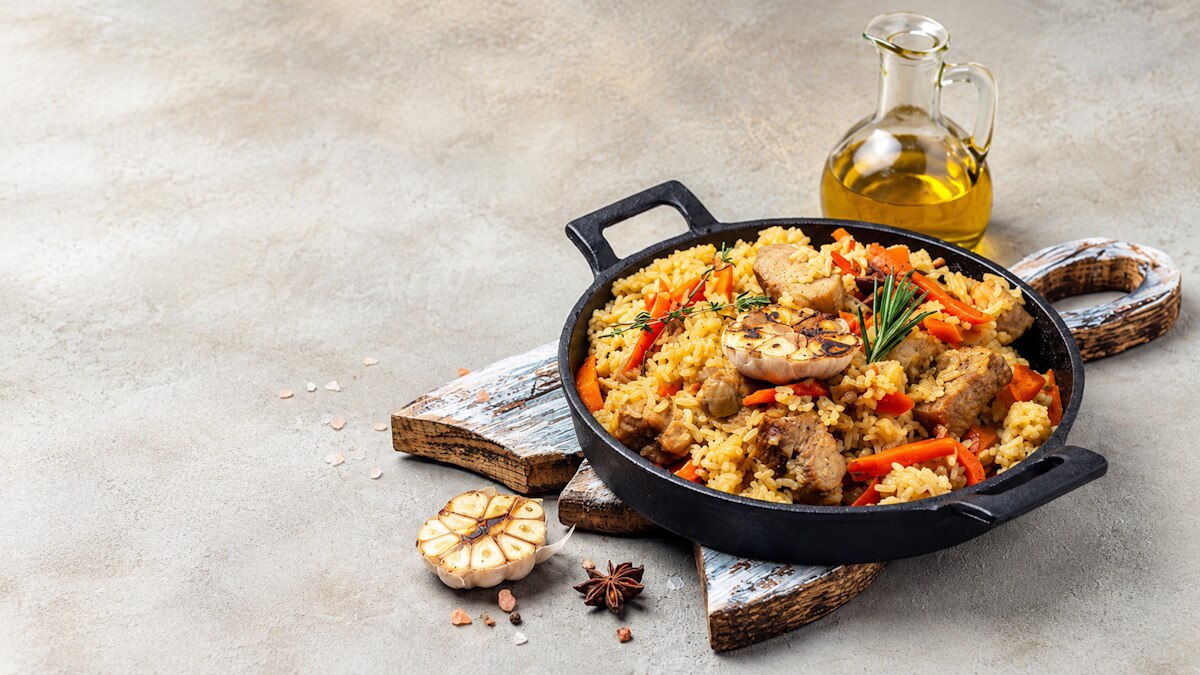
Plov combines rice, meat, carrots and onions in a traditional preparation that varies in ingredients and cooking techniques across the different regions of Uzbekistan.
Samsa, one of the most popular specialties
Samsa is a pastry traditionally baked in a tandir, the clay oven also used for baking bread.
The most common filling is made with meat and onion, but versions with pumpkin, potatoes, vegetables and other ingredients can also be found. The shape, size and fillings may vary depending on the region and where they are prepared.
Samsa are commonly found in bazaars, bakeries and small eateries, where they are often enjoyed freshly baked.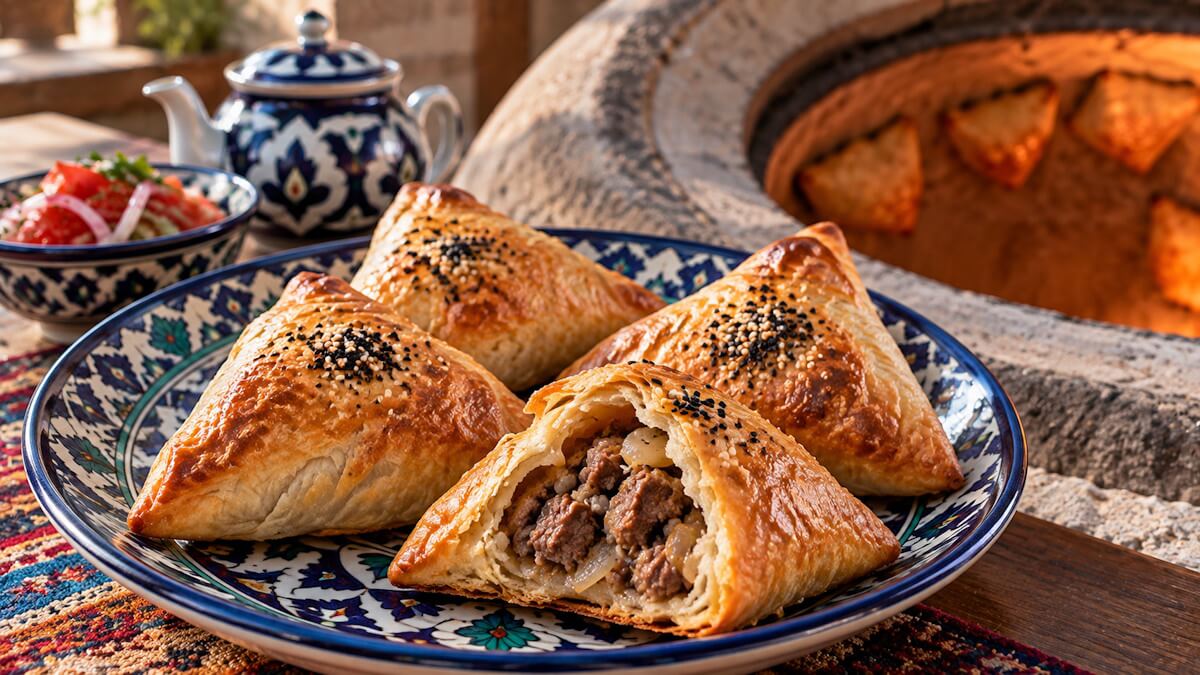
Samsa is a specialty of Uzbek cuisine made with filled pastry, often with meat and onion, and traditionally baked in a tandir oven.
Shurpa, the traditional soup
Shurpa is a hearty soup widely enjoyed in Uzbekistan and other regions of Central Asia. It is generally prepared with meat, potatoes, carrots, onions and other vegetables, slowly cooked in an aromatic broth.
Recipes can vary considerably, reflecting both family traditions and the seasonal availability of ingredients.
It is a simple yet rich dish, closely associated with home cooking and everyday culinary traditions.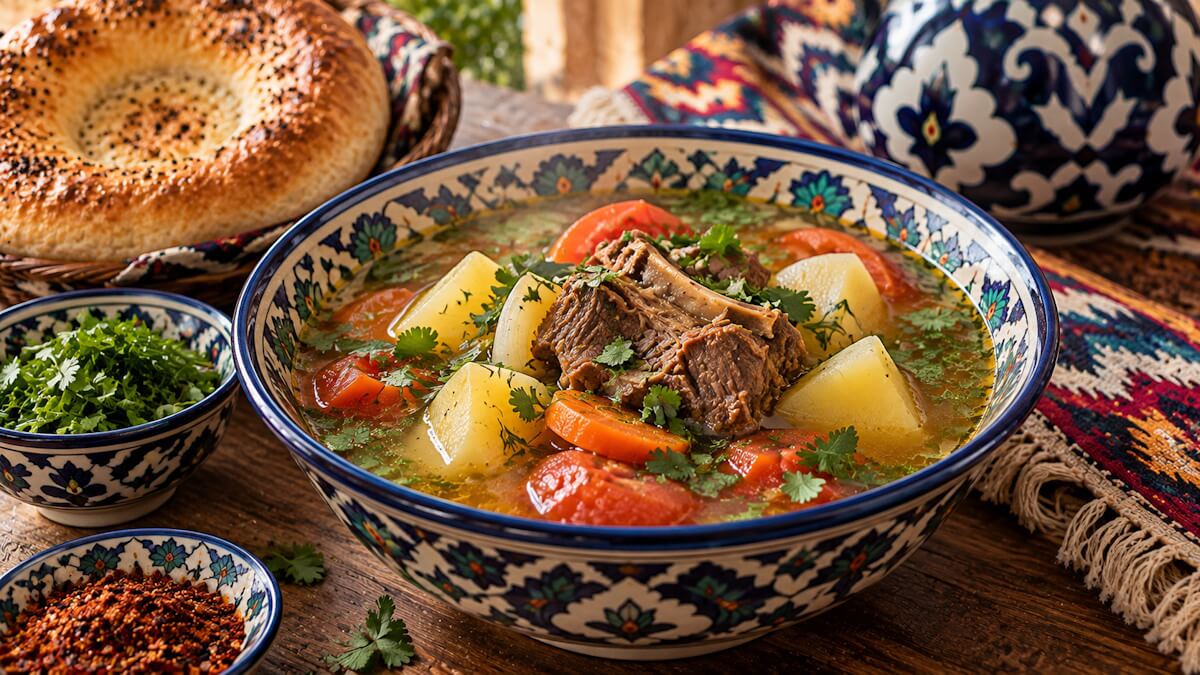
Shurpa is a traditional Uzbek soup made with meat, potatoes, carrots, onions and vegetables slowly cooked in an aromatic broth.
Manti, steamed dumplings
Manti are large dumplings made with thin dough and a filling that can include meat, onion, pumpkin or other vegetables.
Their main characteristic is that they are steamed in a multi-tiered steamer. This cooking method keeps the dough soft while allowing the filling to retain its juices.
They are generally served hot and can be accompanied by sour cream, yogurt or different sauces and seasonings, depending on local traditions.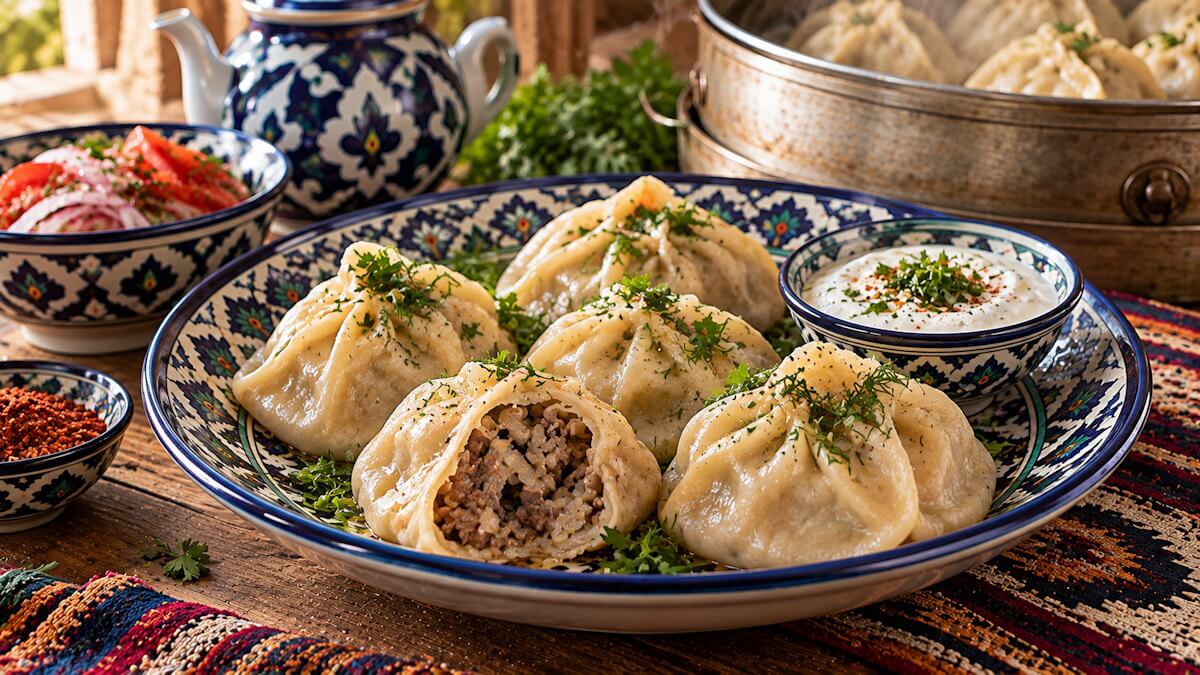
Manti are traditional Uzbek dumplings made with thin dough, generally filled with meat and onion and slowly steamed.
Lagman, noodles with broth and vegetables
Lagman reflects the cultural exchanges that have shaped Central Asia for centuries. It is prepared with long noodles, generally served with meat and vegetables.
It can be served as a soup with a rich broth or as a drier dish, depending on the recipe. Peppers, tomatoes, onions and other vegetables contribute to its particularly aromatic character.
The many variations of lagman make it one of the dishes that best illustrate the different culinary influences found throughout the region.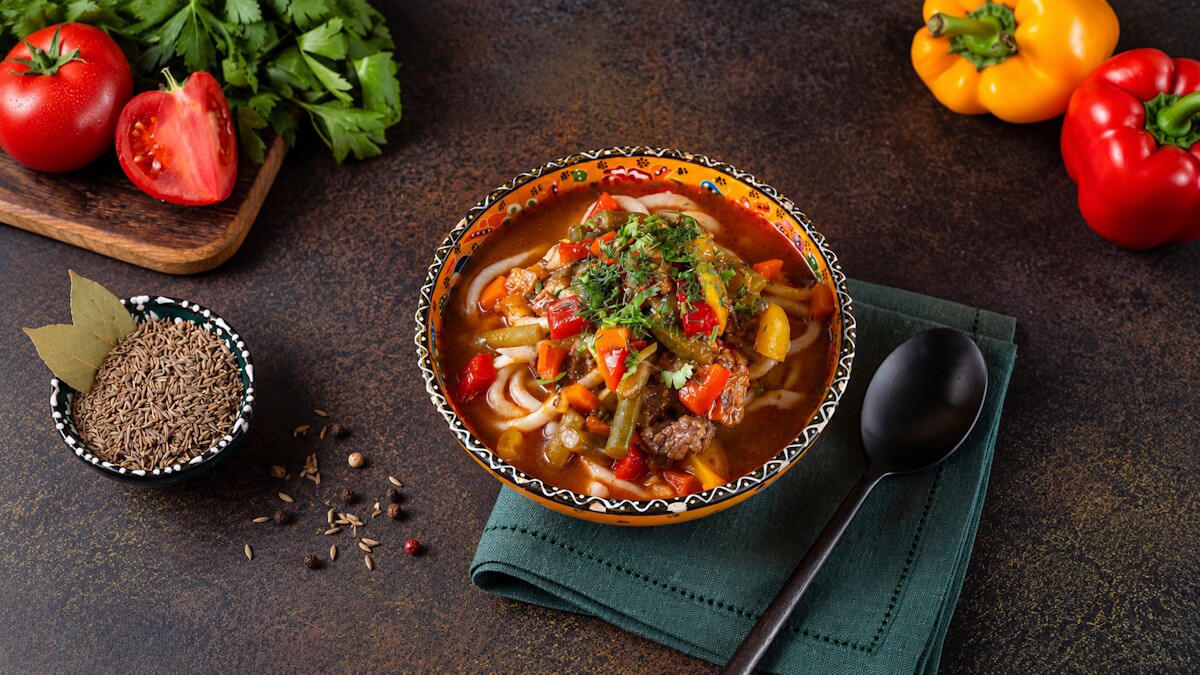
Lagman combines long noodles, meat and vegetables in a dish widely enjoyed in Uzbekistan, served in versions with more broth or with a drier consistency.
Uzbek non bread, an everyday tradition
Non, the traditional Uzbek bread, accompanies most meals. Usually round in shape, it has a central section decorated with patterns stamped into the dough and is often baked on the inner walls of a tandir.
Bread also holds significant cultural value. In Uzbek tradition, it is treated with particular respect and is closely associated with hospitality and sharing a meal.
In bazaars and bakeries, different shapes and decorations can be seen, reflecting local traditions.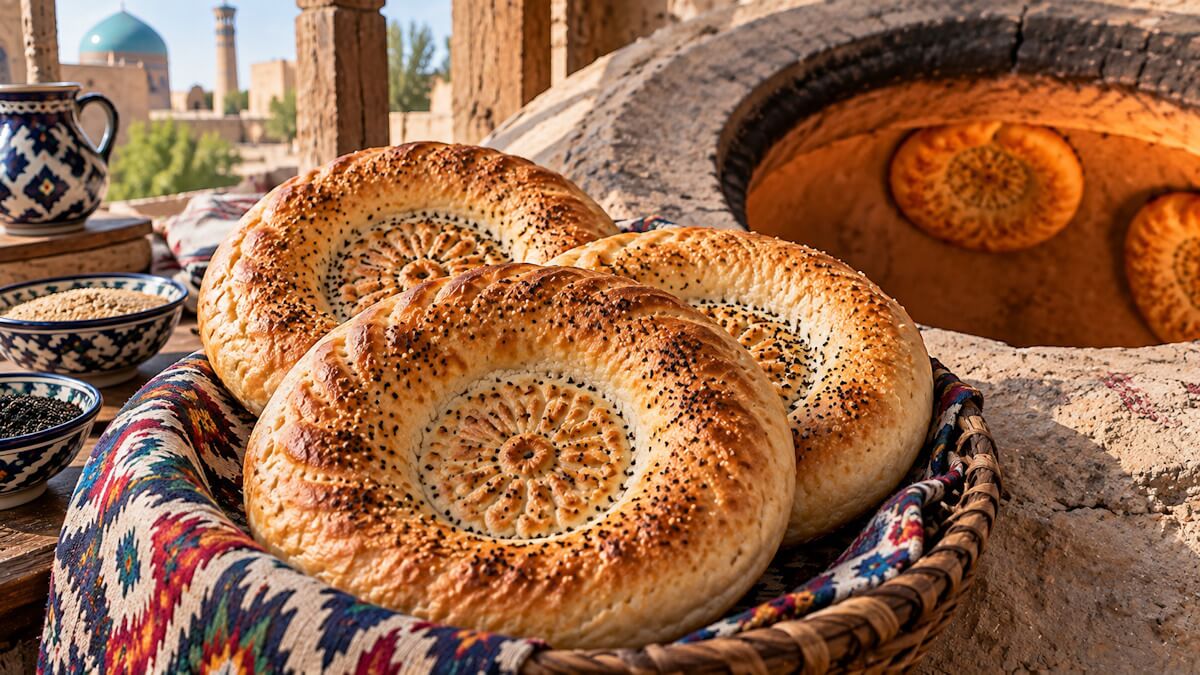
Non bread is an everyday staple of Uzbek cuisine and is traditionally baked in a tandir oven, with shapes and decorations that can vary across different regions.
Bitchak and home-cooked specialties
Alongside the best-known dishes, there are many preparations associated with home cooking. Among these is bitchak, a filled pastry that can be prepared with pumpkin, vegetables or other ingredients and baked in the oven.
It is especially in villages and homes that this more domestic side of Uzbek cuisine emerges, where food preparation remains closely connected to family life and hospitality.
These dishes offer an opportunity to discover a cuisine less commonly found on international menus but still deeply rooted in local traditions.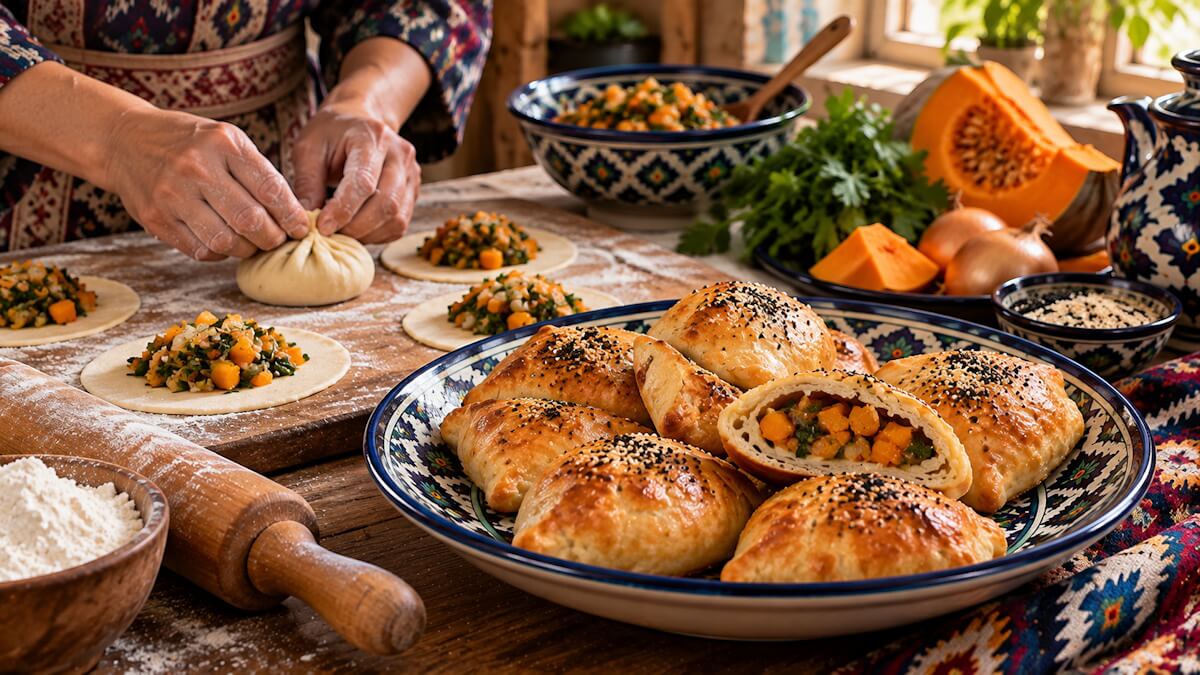
Bitchak is part of Uzbek home cooking: a filled pastry, often prepared with pumpkin or vegetables, that preserves the family character of local culinary traditions.
Salads, vegetables and side dishes
Uzbek cuisine is not made up solely of rice and meat. Tomatoes, cucumbers, onions, peppers, fresh herbs and seasonal vegetables accompany many meals.
Among the simplest preparations is achichuk, a salad generally made with thinly sliced tomatoes and onions and often served alongside plov.
The availability of produce changes with the seasons and helps shape the character of the country’s markets and dining tables.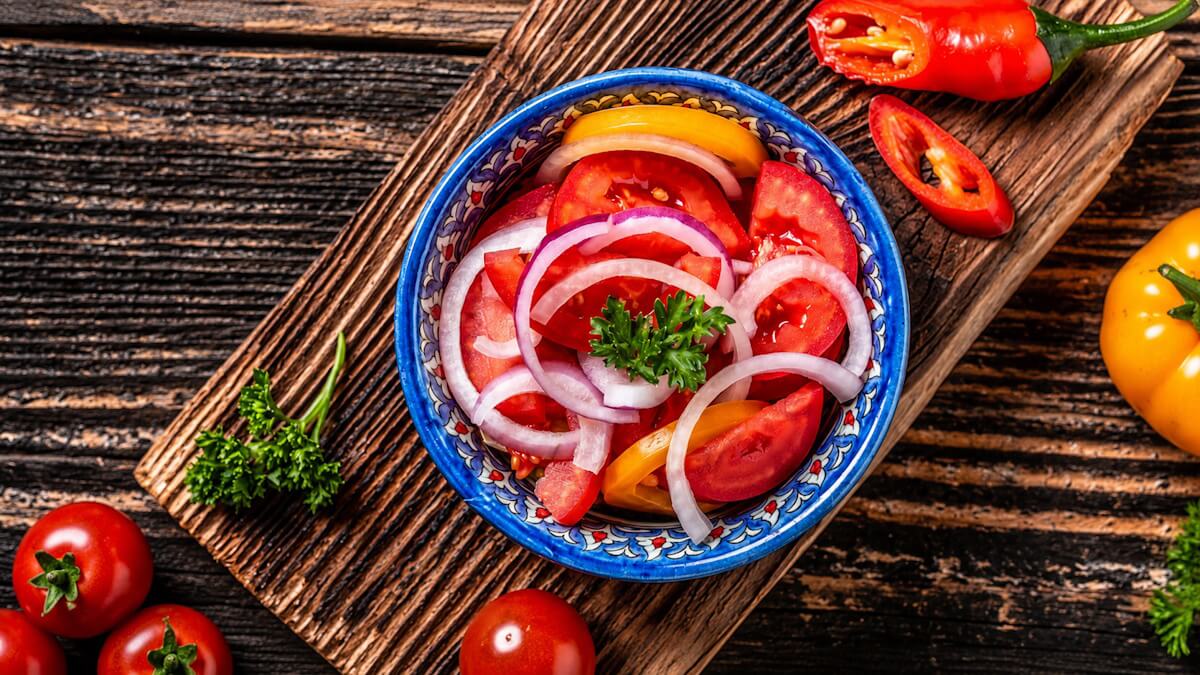
Achichuk is a simple Uzbek salad made with thinly sliced tomatoes and onions, often served as an accompaniment to traditional dishes.
Fruit, dried fruit and products from the bazaars
The bazaars of Uzbekistan are among the best places to discover the variety of products used in local cuisine. Stalls filled with spices, fresh and dried fruit, nuts, almonds, legumes, bread and sweets create a gastronomic landscape that varies considerably with the seasons.
Melons, watermelons, apricots, grapes and pomegranates are particularly abundant during the harvest season, while raisins, dried apricots and other dried fruits are available throughout much of the year.
Visiting a market therefore offers an opportunity to better understand the relationship between cuisine, agriculture and everyday life.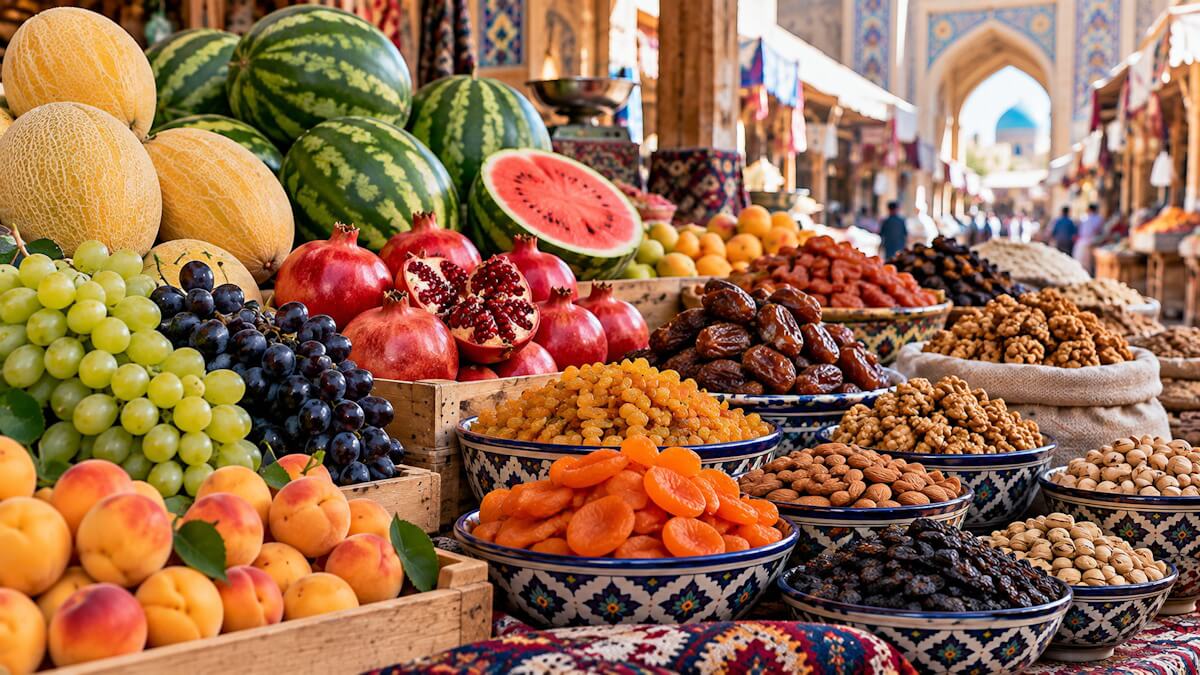
In the bazaars of Uzbekistan, fresh and dried fruit, nuts and seasonal produce reflect the connection between agriculture, cuisine and everyday life in the country.
Tea and beverages in Uzbekistan
Tea accompanies many moments throughout the day and is an important part of Uzbek hospitality. Green tea is particularly popular, although black tea is also widely consumed.
Chaikhanas, the traditional tea houses of Central Asia, are gathering places where people drink tea, eat and spend time together.
Offering a cup of tea to a guest remains a gesture deeply associated with hospitality and welcoming.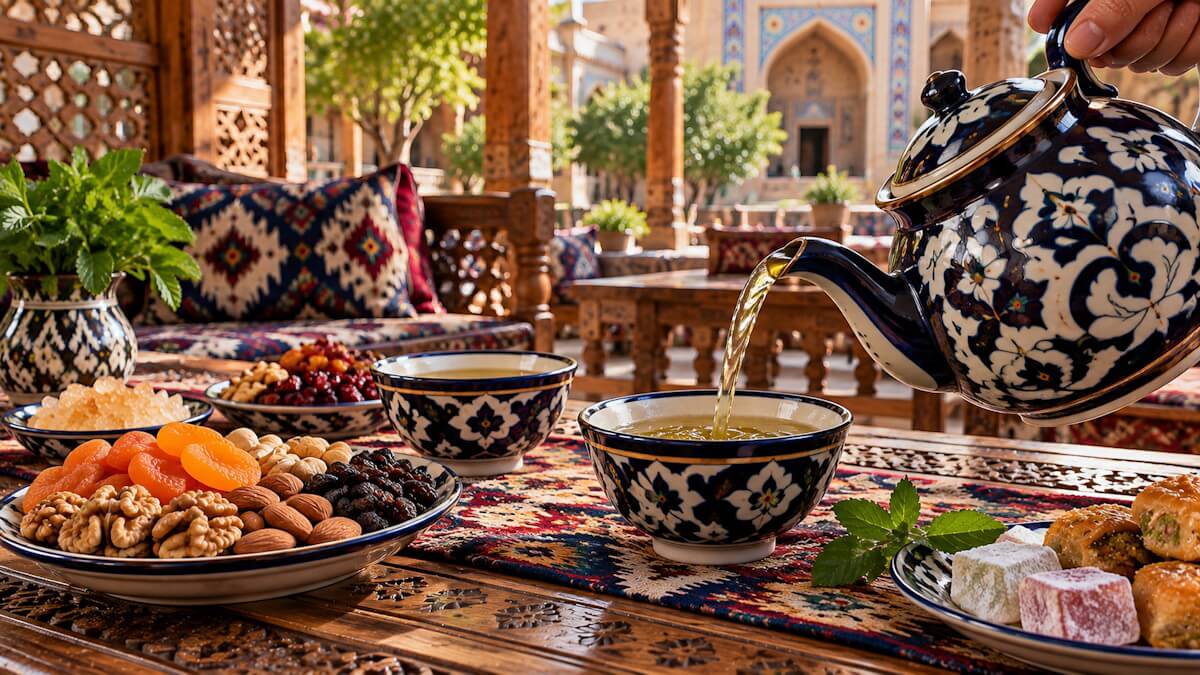
Green tea accompanies many moments of the day in Uzbekistan, and in chaikhanas it becomes part of the tradition of hospitality and conviviality.
Sweets and traditional flavors
Pastries and sweet treats include preparations made with honey, sugar, nuts, seeds and dried fruit. In markets, it is also common to find halva and various regional specialties.
Sweets are often served with tea and may appear on the table alongside fresh and dried fruit, especially during family gatherings and social occasions.
Rather than having a single confectionery tradition, Uzbekistan offers a variety of sweet preparations influenced by the different cultures of Central Asia.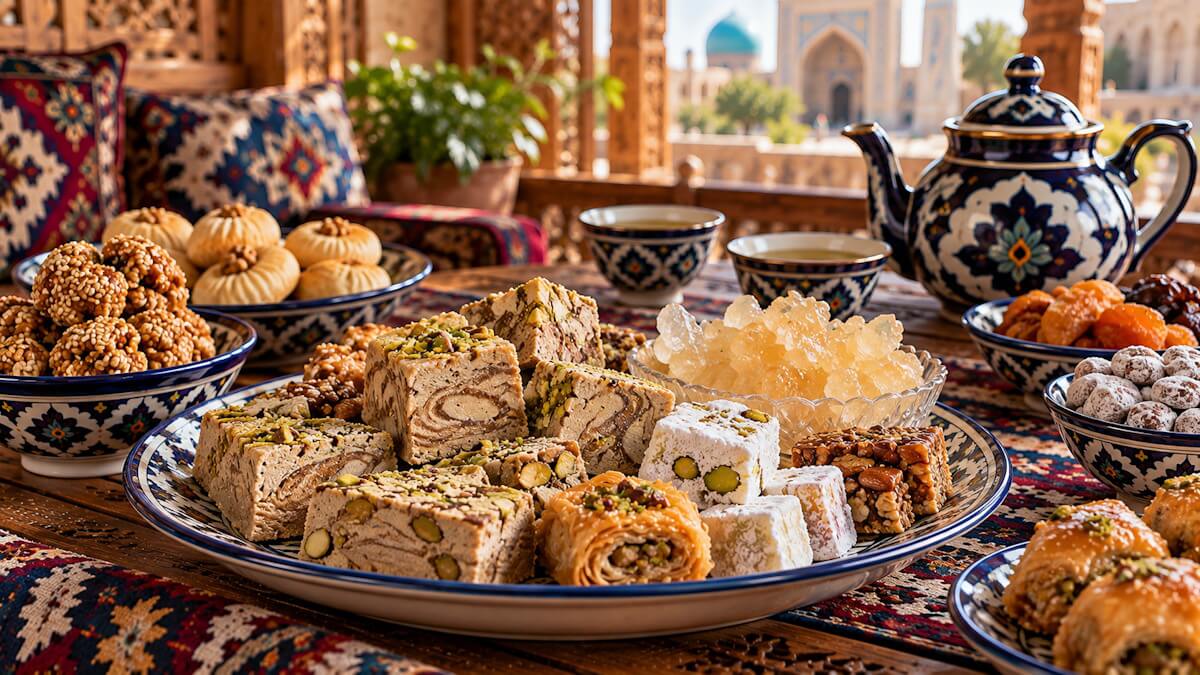
Halva, navat and sweets made with nuts and seeds often accompany tea, completing the variety of flavours found in Uzbek culinary tradition.
What to eat in Uzbekistan across cities and local traditions
The cuisine gradually changes as you travel across the country. Tashkent, Samarkand, Bukhara and Khiva share many of the main dishes, but there can be differences in preparation methods, ingredients and local customs.
Plov is one of the clearest examples: there are regional variations distinguished by the type of rice, meat, vegetables, seasonings and preparation methods used.
For this reason, it is interesting to try the same dish in different cities and discover how a shared culinary tradition can take on distinctive local characteristics.
Eating at the bazaars of Uzbekistan
Bazaars are not only places where people buy products. They are also spaces where visitors can observe everyday life and discover the country’s culinary culture.
Among stalls selling bread, spices, dried fruit, vegetables and fresh produce, it is possible to understand which ingredients are most commonly used in Uzbek cuisine. Larger markets also have areas and small eateries dedicated to food.
The Chorsu Bazaar in Tashkent is one of the best-known examples, but markets and bazaars are part of everyday life in the country’s other cities as well.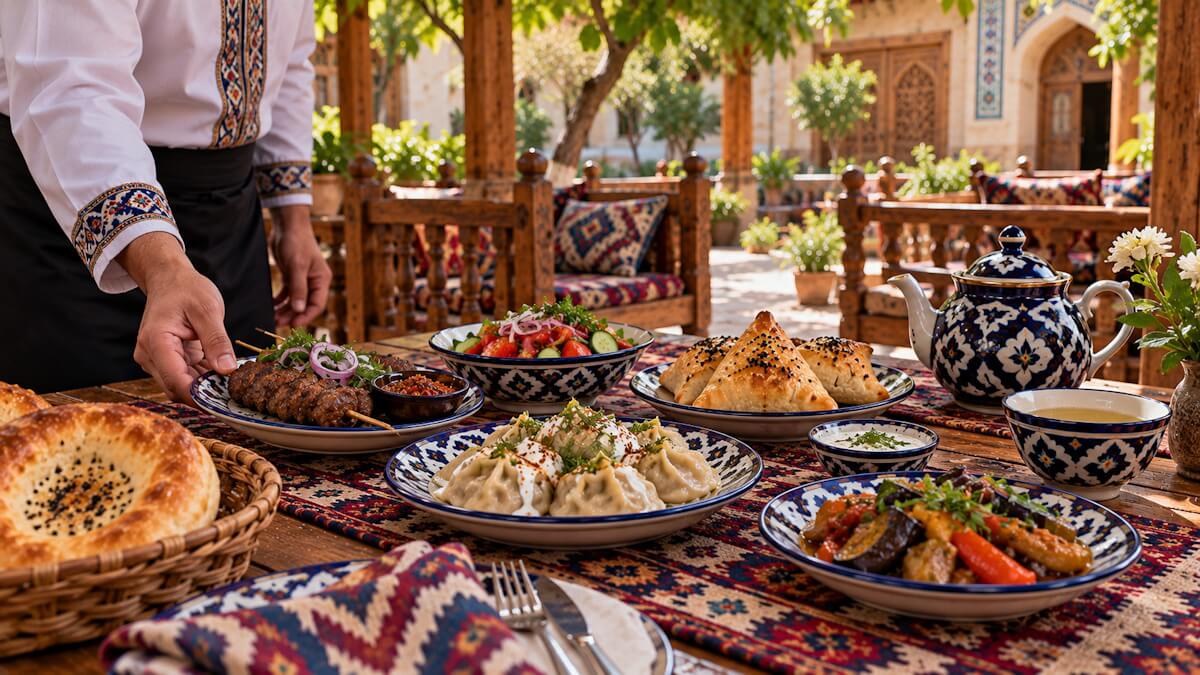
Between Tashkent, Samarkand, Bukhara and Khiva, local recipes and specialties offer an opportunity to discover the different expressions of Uzbek cuisine.
Practical tips for discovering Uzbek cuisine
During your trip, it can be interesting to alternate between restaurants, small eateries and markets, as each offers an opportunity to discover a different aspect of the local cuisine.
Travellers following specific diets or with food allergies should check the ingredients before ordering. Meat, animal fats, nuts, dairy products and gluten may be present in various dishes.
At bazaars, it is also advisable to choose food that has been prepared and stored under appropriate conditions and to use safe drinking water during your stay.
Uzbek cuisine: what to try during your trip
Discovering Uzbek cuisine means going beyond individual dishes. Plov, samsa, shurpa, manti, lagman and non bread tell the story of a tradition in which food is closely connected to family, hospitality and sharing.
Markets, tea houses and home kitchens complete this picture, showing how the ancient influences of Central Asia continue to coexist with everyday customs.
Once you have discovered the flavours of the country, you can also learn more about what to see in Uzbekistan, from historic cities to deserts, lakes and mountains.
Travellero Club
Join our community to access:
 Special rates
- Exclusive benefits and freebies
- Additional discounts
- Accumulate holiday points

Get the Travellero Club discount now
By pressing "Join the club" I declare that I have read and understood the information on the processing of my personal data provided by Travellero (View)