 Hotel search
 Call now

 Write by Whatsapp
 Write by E-mail


Or write to us:
By pressing send button I declare that I have read and understood the information on the processing of my personal data provided by Travellero (View)
What to See in Uzbekistan: Historic Cities and Nature
Summary
- Tashkent, between the modern city and historical heritage
- Samarkand and the architecture of the Timurid era
- Bukhara, in the heart of the ancient caravan city
- Khiva and the fortified city of Ichan Kala
- The Kyzylkum Desert
- Lake Aydarkul between desert and steppe
- The Nuratau Mountains and rural villages
- The Silk Road and the cities of Uzbekistan
- Markets, cuisine and everyday life
- How to choose what to see in Uzbekistan
Uzbekistan is one of the countries in Central Asia where the legacy of the ancient caravan routes can still be clearly seen in the urban landscape. Madrasas covered with glazed tiles, mausoleums, mosques, minarets and historic markets accompany a journey through cities such as Samarkand, Bukhara and Khiva, which for centuries were meeting points for merchants, scholars and travellers from different regions of Asia.
But what to see in Uzbekistan beyond its best-known cities? The landscape gradually changes as you move away from the major historic centres: plains give way to the expanses of the Kyzylkum Desert, the waters of Lake Aydarkul and the Nuratau Mountains, where small villages offer a glimpse into the country's more rural side.
Discovering Uzbekistan therefore means combining architecture, history and everyday life with remarkably diverse landscapes. Here are some of the places that offer a deeper understanding of the country's identity.
Tashkent, between the modern city and historical heritage
Tashkent reveals a different side of Uzbekistan compared with the country's ancient caravan cities. Wide avenues and modern districts coexist with places connected to the history and culture of the capital.
Among them are the Khast-Imam Complex, an important religious landmark, and Chorsu Bazaar, where spices, dried fruit, bread and local products offer an insight into everyday life in the city. Another distinctive feature is the Tashkent Metro, with stations decorated in different architectural and artistic styles.
To discover more about monuments, neighbourhoods and places to visit, see our guide to things to see in Tashkent.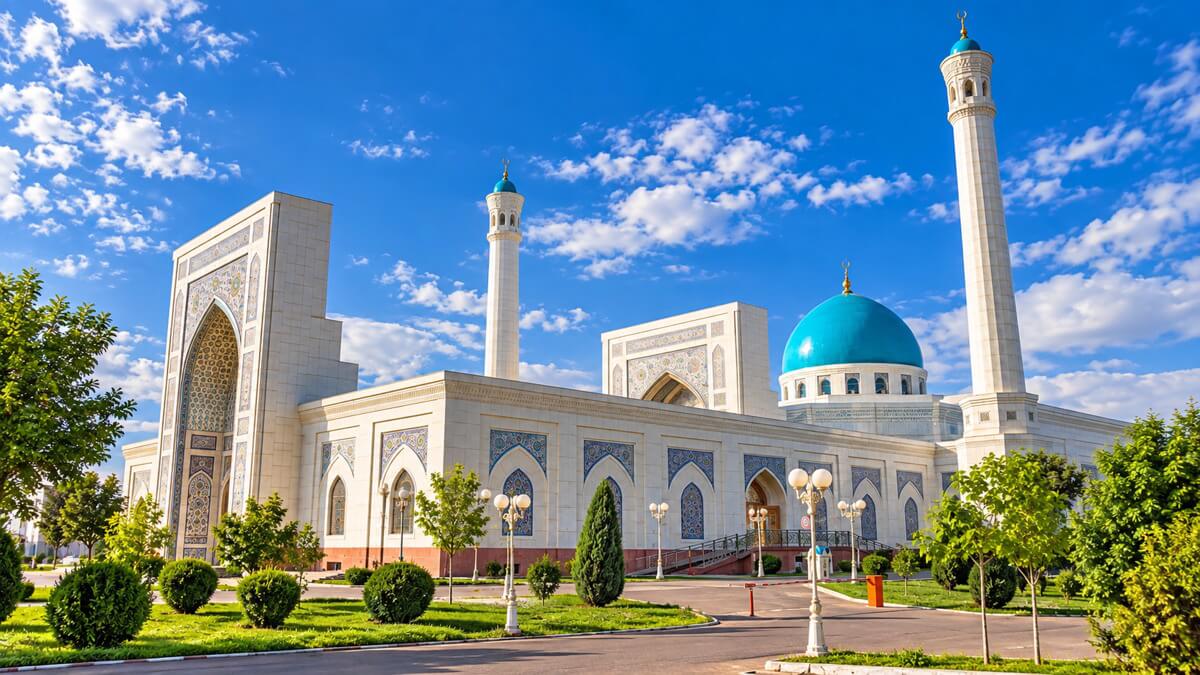
Tashkent preserves important examples of Islamic architecture alongside the modern districts that characterize the capital of Uzbekistan today.
Samarkand and the architecture of the Timurid era
Among the places to see in Uzbekistan, Samarkand holds a central position thanks to its architectural heritage and its history connected with the ancient trade routes of Central Asia.
The symbol of the city is Registan, the great square bordered by the Ulugh Beg, Sher-Dor and Tilla-Kori madrasas. Samarkand's monumental heritage continues with Gur-e Amir, associated with Amir Timur and his dynasty, the Bibi-Khanum Mosque and the Shakhi Zinda complex, characterised by a succession of decorated mausoleums and portals.
Alongside its monuments, Siyab Bazaar offers an insight into everyday life in the city through bread, spices, dried fruit and local products.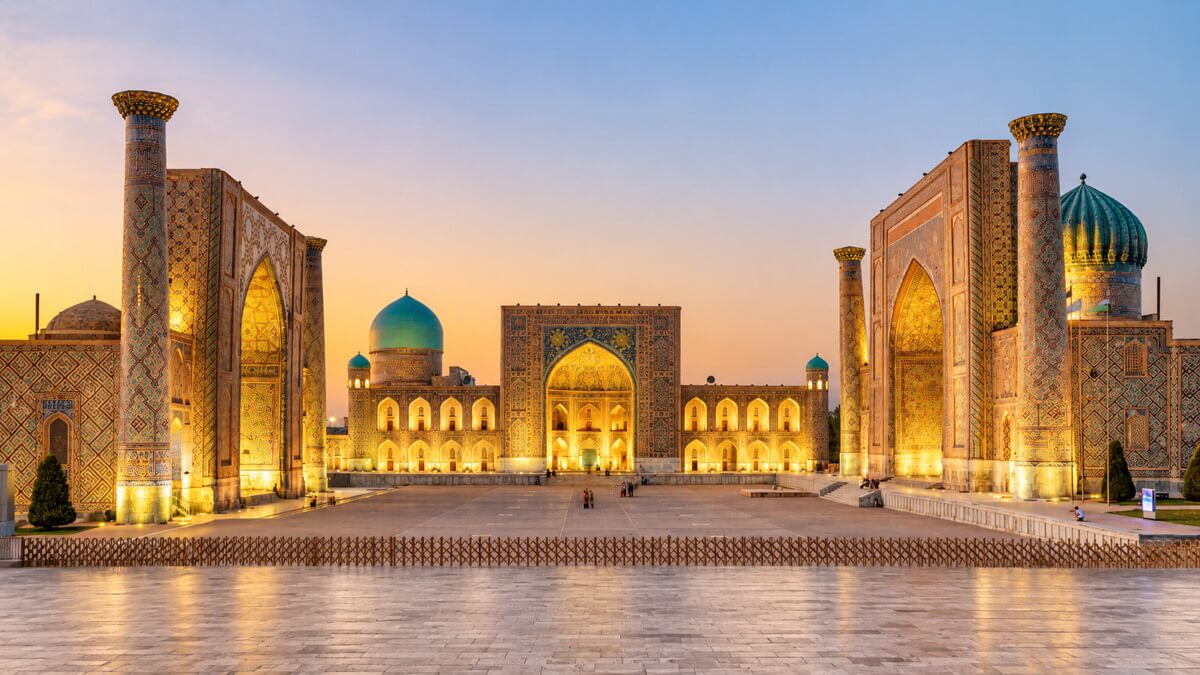
The Registan of Samarkand brings together three monumental madrasas decorated with majolica tiles and geometric motifs, among the finest examples of the Timurid era.
Bukhara, in the heart of the ancient caravan city
In Bukhara, the historical heritage extends across an ancient centre of madrasas, mosques, courtyards and trading structures that bear witness to the role the city played along the routes of Central Asia.
Among its most representative landmarks are Lyabi Hauz, developed around the large pool, and the Poi-Kalyan complex, recognisable by its minaret, mosque and Mir-i-Arab Madrasa. The Ark Fortress, meanwhile, recalls the political history of the city and its rulers.
Bukhara's heritage also includes the Bolo Hauz Mosque, the Samanid Mausoleum and the Sitorai Mokhi-Khosa summer residence, places that reveal different periods and architectural styles.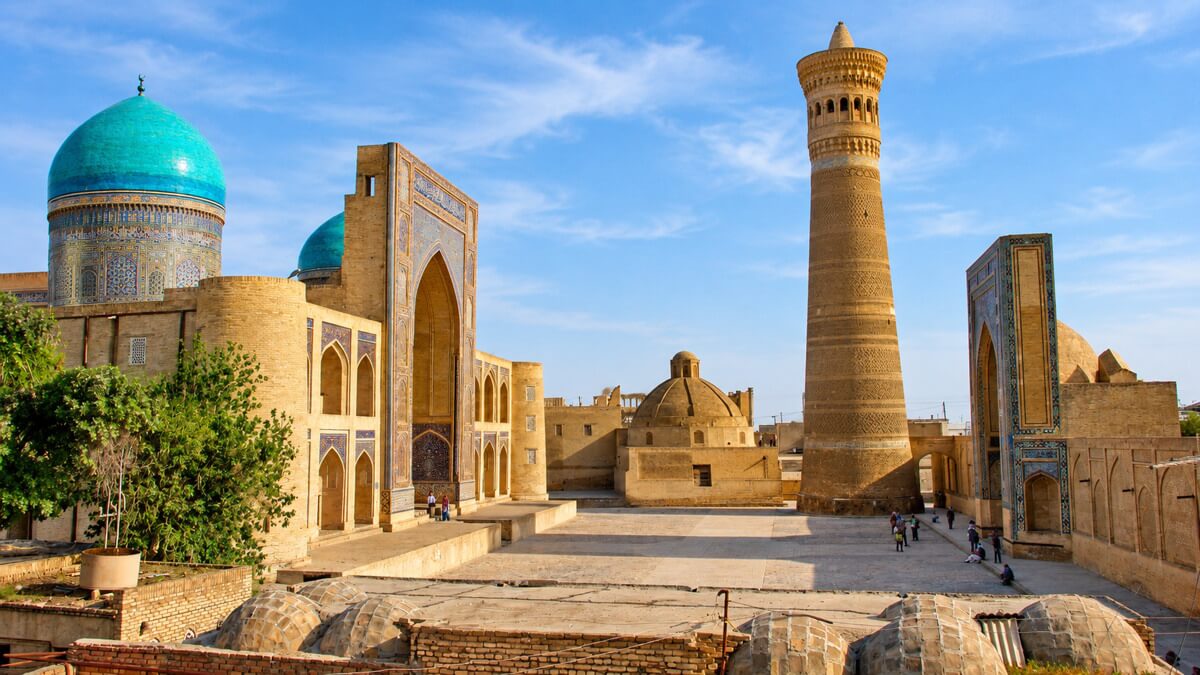
The Poi-Kalyan complex dominates Bukhara’s historic centre with its famous minaret, madrasas and architecture recalling the city’s caravan-route past.
Khiva and the fortified city of Ichan Kala
Khiva preserves one of the most distinctive historical centres in Uzbekistan. The fortified city of Ichan Kala, enclosed by its ancient walls, brings together madrasas, mosques, minarets, palaces and traditional houses within an urban fabric that developed along the trade routes of Central Asia.
Among its most recognisable landmarks is Kalta Minor, the large unfinished minaret covered in glazed tiles, alongside the Muhammad Amin Khan Madrasa and the Kuhna Ark complex, the former citadel of the khans of Khiva.
Narrow streets, courtyards, artisan workshops and brick façades complete the image of Ichan Kala, offering an opportunity to observe not only individual monuments but also the structure of the ancient city.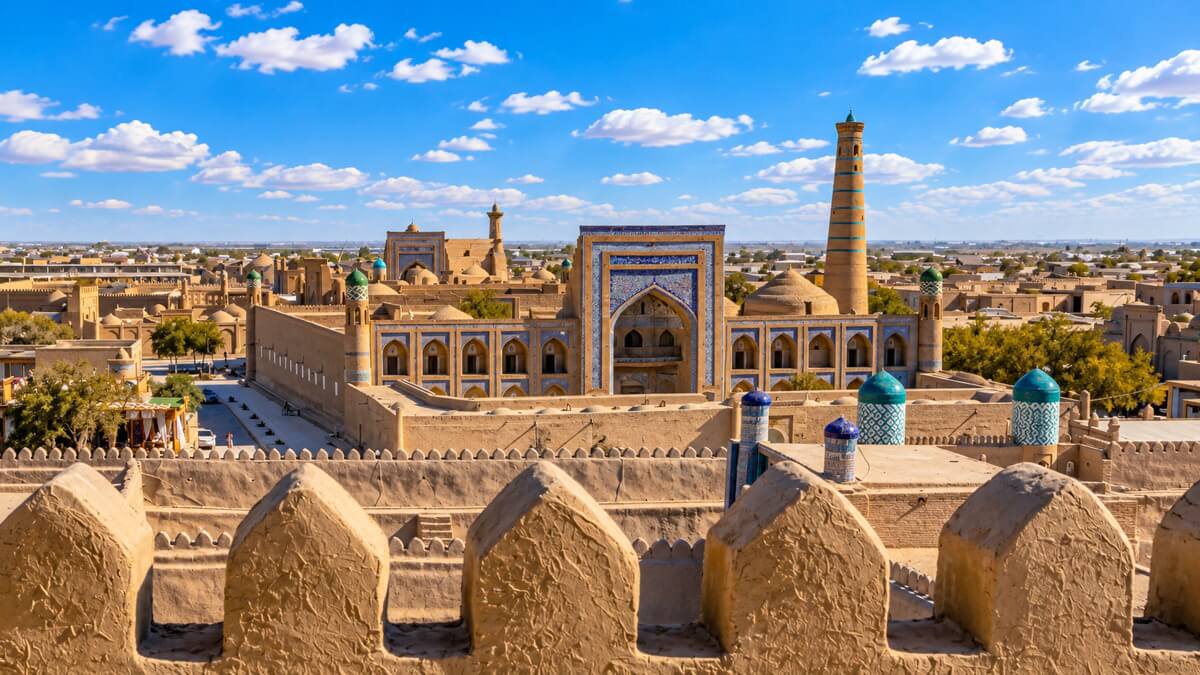
In the heart of Khiva, the Kalta Minor rises among the madrasas and ancient buildings of Ichan Kala, the fortified old town that preserves the city’s historic character.
The Kyzylkum Desert
Uzbekistan is not only a land of monumental cities. A significant part of its territory is occupied by the Kyzylkum, the vast Central Asian desert extending across Uzbekistan, Kazakhstan and Turkmenistan.
Crossing it means observing a landscape that gradually changes: arid areas and sandy plains alternate with sparse vegetation and isolated settlements. The Kyzylkum also helps explain the geography of a territory that for centuries both separated and connected the caravan cities of the region.
Towards its edges, the desert landscape gradually gives way to different environments, including the area around Lake Aydarkul, creating one of the most distinctive natural contrasts in central Uzbekistan.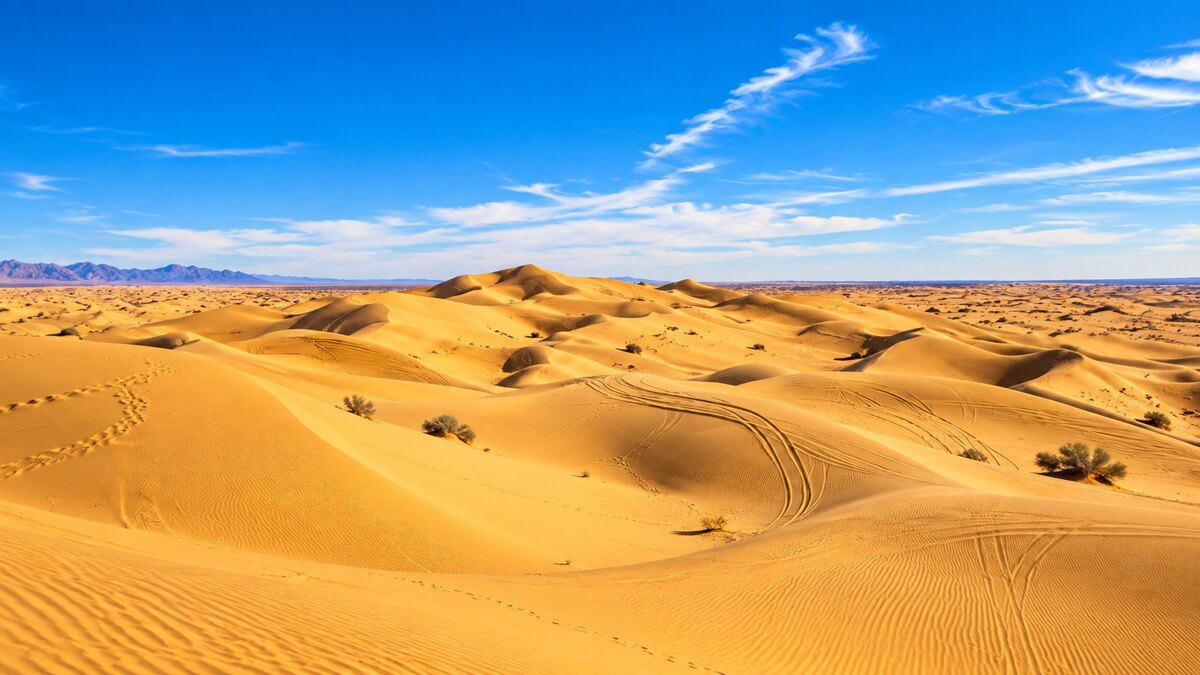
The Kyzylkum stretches across central Uzbekistan, with arid plains, sparse vegetation and vast open spaces that characterize the landscape of Central Asia.
Lake Aydarkul between desert and steppe
On the edge of the Kyzylkum lies Lake Aydarkul, a vast body of water that creates a striking contrast with the arid expanses of the desert and introduces visitors to one of the most distinctive natural environments of central Uzbekistan.
Its shores, open spaces and the presence of water gradually transform the landscape, revealing a side of the country very different from its historical cities. The area also forms a transition between the desert regions and the territories leading towards the Nuratau Mountains.
Yurt camps can also be found around Aydarkul, reflecting traditions connected with the nomadic culture of Central Asia.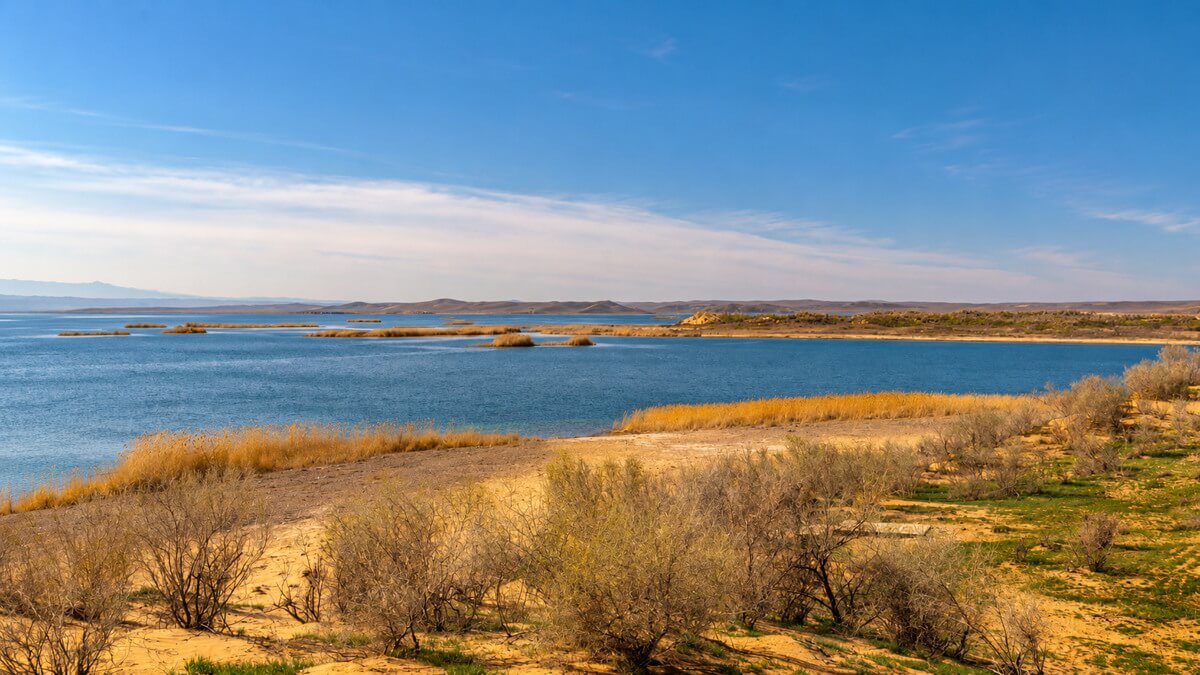
The waters of Lake Aydarkul interrupt the arid expanses on the edge of the Kyzylkum Desert, creating one of the most distinctive natural contrasts in central Uzbekistan.
The Nuratau Mountains and rural villages
Towards the Nuratau Mountains, the landscape of central Uzbekistan gradually changes: vast open expanses give way to rocky hills, valleys and small rural settlements.
Villages such as Ukhum offer an opportunity to discover a side of the country far removed from the monumental architecture of the major cities. Houses, cultivated land, livestock and traditional water-management systems reflect a way of life closely connected with the territory and its available resources.
Arid slopes, waterways and cultivated areas form a landscape where natural environments intertwine with village life, adding another dimension to the discovery of Uzbekistan beyond its main historical cities.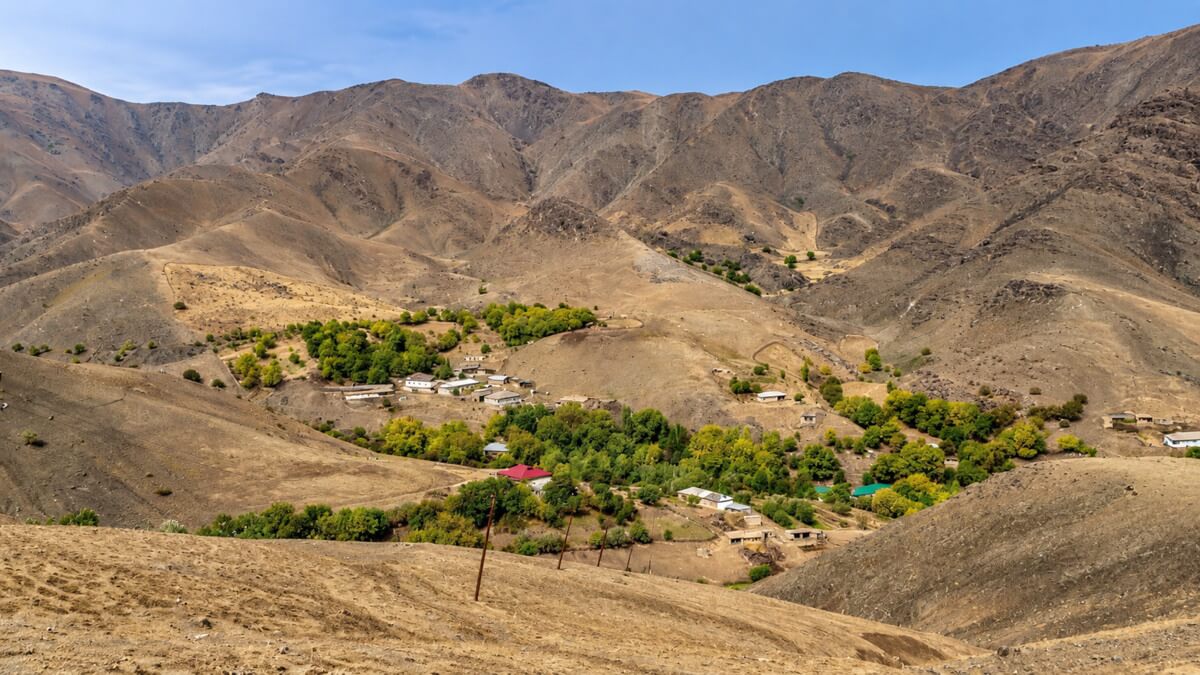
Among the Nuratau Mountains, valleys, cultivated land and small villages such as Ukhum reveal a rural landscape shaped by local resources and everyday life in central Uzbekistan.
The Silk Road and the cities of Uzbekistan
To understand the heritage of Samarkand, Bukhara and Khiva, it is important to consider the position of present-day Uzbekistan along the ancient trade networks known as the Silk Road.
Rather than a single road, it was a network of routes through which not only goods but also knowledge, techniques, ideas and religious traditions circulated. The cities of Central Asia consequently became places of encounter and exchange between peoples and cultures from different regions.
Madrasas, caravanserais, markets and religious complexes still preserve traces of these connections, developed over the centuries between Central Asia, Persia, China and other territories linked by the great caravan routes.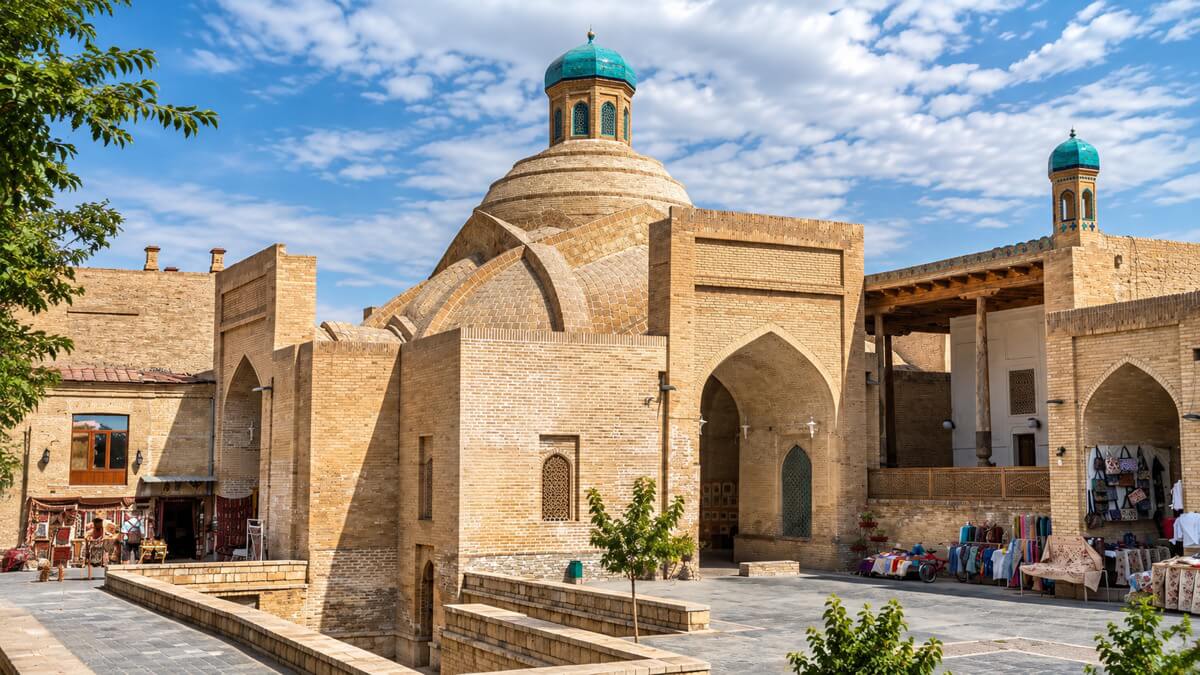
The ancient Silk Road routes crossed Central Asia, connecting cities, markets and trading centres across present-day Uzbekistan.
Markets, cuisine and everyday life
The markets of Uzbekistan offer a glimpse into the country’s everyday life, with freshly baked bread, fruit, spices and local products. Its cuisine also preserves traditions deeply rooted in family life and hospitality.
To discover its dishes, ingredients and culinary customs, learn more about Uzbek cuisine and its traditional specialties.
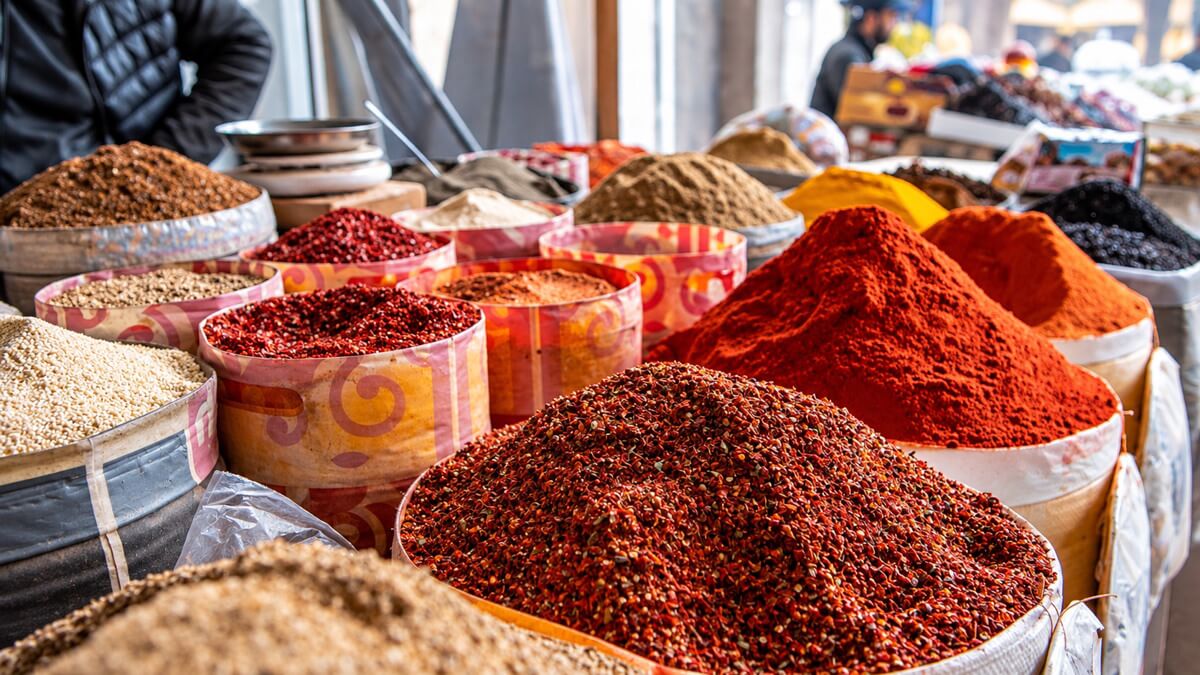
In Uzbekistan’s bazaars, spices, dried fruit, non bread and local products reflect the country’s cuisine and everyday traditions.
How to choose what to see in Uzbekistan
Deciding what to see in Uzbekistan depends on which aspects of the country you would like to discover and how much time you have available. The historical cities provide an opportunity to explore architecture, trade and cultures that developed along the ancient routes of Central Asia, while the country's interior reveals different landscapes and ways of life.
Those interested in historical heritage can focus on madrasas, mosques, mausoleums and ancient caravan centres, while travellers wishing to discover more of the territory can combine the cities with deserts, lakes, mountains and rural villages.
Uzbekistan therefore offers different yet complementary experiences, through which history, everyday life and natural environments contribute to telling the story of the country's identity.
Travellero Club
Join our community to access:
 Special rates
- Exclusive benefits and freebies
- Additional discounts
- Accumulate holiday points

Get the Travellero Club discount now
By pressing "Join the club" I declare that I have read and understood the information on the processing of my personal data provided by Travellero (View)